You're shopping: DAVIDSONVILLE
(change store)
Fruit Trees and Fruit Shrubs - BLACKBERRY 'BABY CAKES' 3G
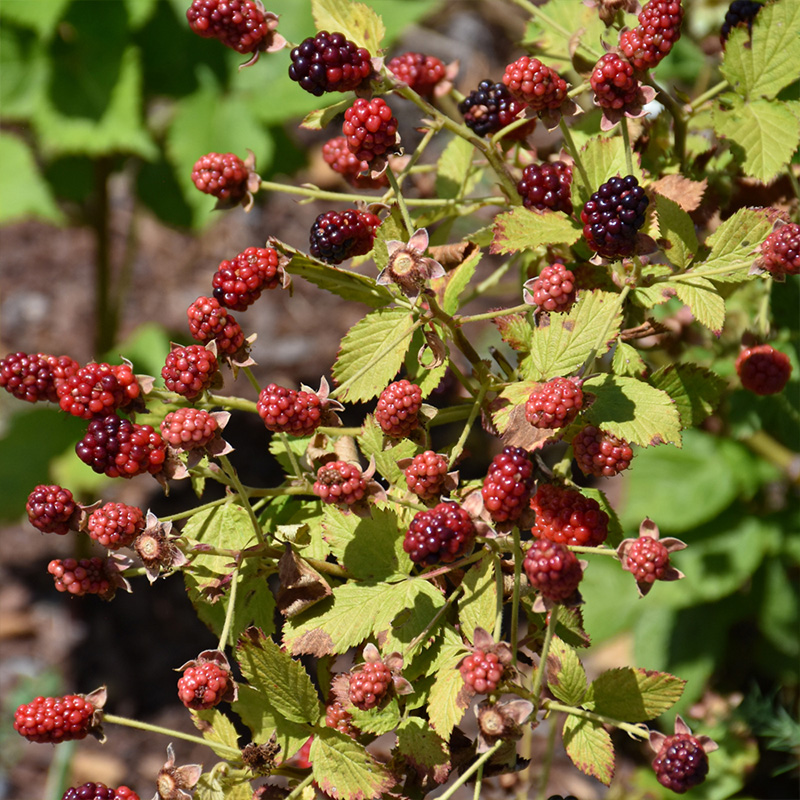
BLACKBERRY 'BABY CAKES' 3G
no reviews for this product. Login to place a review.
Your Price $49.99
Item Number 284312
In store quantity:
0
$49.99/ EA
Baby Cakes Blackberry
Rubus 'APF-236T'
Height: 4 feet
Spread: 4 feet
Sunlight: Full sun
Hardiness Zone: 4b
Description:
A compact, thornless blackberry producing large, juicy, sweet berries in mid summer. Its tidy growth habit makes it ideal for patio containers and small garden spaces. This hardy variety is a heavy producer on second-year canes and requires a specific pruning routine along with protection from birds for best harvests.
Edible Qualities:
Baby Cakes Blackberry produces large black oval berries that ripen in mid summer. The fruit has a sweet flavor and juicy texture and is well suited for fresh eating, cooking, baking, preserves, canning, and freezing.
Ornamental Features:
Baby Cakes Blackberry features dainty white flowers with chartreuse centers along the branches in late spring. It has green deciduous foliage with serrated oval compound leaves that do not develop notable fall color. Abundant glossy black berries add seasonal interest in summer.
Landscape Attributes:
Baby Cakes Blackberry is an open multi-stemmed deciduous shrub with an upright spreading habit of growth. Its relatively coarse texture helps it stand apart from plants with finer foliage.
This is a high maintenance plant that requires regular care and upkeep. Each spring, remove all dead and two-year-old canes at ground level, leaving only the previous year's growth to produce fruit. It attracts birds, and gardeners should be aware of the following characteristics that may warrant special consideration:
- Suckering
- Disease
Baby Cakes Blackberry is recommended for the following landscape applications:
- Mass Planting
- Naturalizing and Woodland Gardens
- Orchard and Edible Landscaping
Planting & Growing:
Baby Cakes Blackberry will grow to be about 4 feet tall at maturity, with a spread of 4 feet. It tends to be slightly leggy, with a typical clearance of 1 foot from the ground. It grows at a fast rate and under ideal conditions can be expected to live for approximately 10 years. This is a self-pollinating variety and does not require another plant nearby to set fruit.
This shrub should only be grown in full sunlight and performs best when planted in its own designated space, as it may not compete well with other plants. It prefers average to moist soil and should not be allowed to dry out. It is not particular about soil type or pH and is somewhat tolerant of urban pollution. This particular variety is an interspecific hybrid.