
You're shopping: DAVIDSONVILLE
(change store)
Departments - SAMBUCUS CANADENSIS 5G
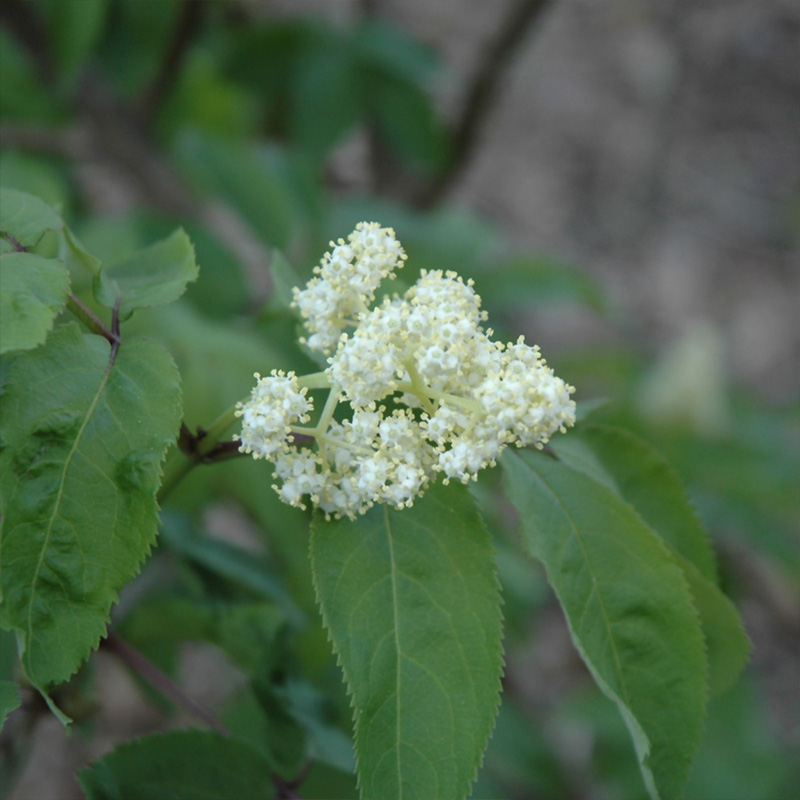
SAMBUCUS CANADENSIS 5G
no reviews for this product. Login to place a review.
Your Price $64.99
Item Number 383515
In store quantity:
9
American Elder
Sambucus canadensis
Height: 10 feet
Spread: 8 feet
Sunlight: Full sun / Partial shade
Hardiness Zone: 2b
Description:
A large, vigorous shrub producing attractive clusters of small white flowers in spring followed by purplish-black berries. Thick, pithy stems give it a coarse appearance in winter. It is very adaptable and survives with minimal care, though it has a tendency to sucker.
Ornamental Features:
American Elder features showy clusters of lightly scented creamy white flowers held atop the branches in early summer. It has dark green deciduous foliage, with compound leaves that turn yellow in fall. Deep purple fruits appear in clusters in early fall and add seasonal interest.
Landscape Attributes:
American Elder is a multi-stemmed deciduous shrub with an upright spreading habit of growth. Its relatively coarse texture helps it stand apart from plants with finer foliage.
This is a high maintenance shrub that requires regular care and upkeep and is best pruned in late winter once the threat of extreme cold has passed. It is a good choice for attracting birds. Gardeners should be aware of the following characteristic that may warrant special consideration:
- Suckering
American Elder is recommended for the following landscape applications:
- Mass Planting
- Hedges and Screening
- General Garden Use
- Naturalizing and Woodland Gardens
Planting & Growing:
American Elder will grow to be about 10 feet tall at maturity, with a spread of 8 feet. It tends to be slightly leggy, with a typical clearance of 2 feet from the ground, and is suitable for planting under power lines. It grows at a fast rate and under ideal conditions can be expected to live for approximately 30 years.
This shrub performs best in full sun to partial shade and is very adaptable to both dry and moist growing conditions. It is not particular about soil type or pH and is highly tolerant of urban pollution. It will even thrive in inner city environments. This species is native to parts of North America.